will brady's ruminations

Dear Readers: From now on, I'll be posting at the new Short Notes blogsite. (http://willbradyjournal2.blogspot.com/)
I hope this does not cause too much confusion.
Labels: ruminations, short notes, will brady, will brady journal
¶ 15:03 0 comments
 • Police catch Peeping Tom at a nudie show. So, what's the point?
• Man fined for blowing his nose. In England. Gives new meaning to the phrase "stiff upper lip", eh?
• Also in England Town's mayor caught stealing women's underwear. At least he wasn't shoplifting, however. He was stealing it from a woman's dresser drawer in her home. [UPDATE: The Mayor had twice been elected mayor of Preesall and Knott End, near Fleetwood, Lancs,] With no statement proffered, he resigned from his post.
• Rupert Murdoch's Fox the most trusted name in news... according to leaning-to-the-right-wing opinionator Politico.
• Merriam-Webster's Dictionary censored by Menifee California School district. "It's just not age-appropriate," said school spokeswoman Betti Cadmus to the the Press-Enterprise. "It's hard to sit and read the dictionary, but we'll be looking to find other things of a graphic nature."
Evidently one—count ‘em, one—- parent complained so, rather than choosing a thoughtful and measured response to calm the histrionic parent, the local district officials instead swooped in and purged all the district’s schools of the dictionary.
 • Censorship again! This time in Culpepper Virginia, banning the Diary of Anne Frank.. Why not just forbid going to libraries? Ban reading [oh, Sorry, Rupert Murdoch - trusted news source notwithstanding - is helping that cause already]
• Who else censors books? A whole passel of organizations, even Sarah Palin has a list.
• Wisconsin school district bans "sexual bending" during school dances and requires that "...both feet must remain on the dance floor at all times..." This appears to rule out performances of the Charleston, Electric Slide, the Cha-Cha and virtually every other dance step I can think of.

• Santa Claus wins Peace Prize. No, this is not lifted from The Onion.
• Fashion News! Models from the Wal-Mart runways.
• Dillie the friendly deer likes to share her owners’ bed at night. 48-year-old vet Dr Melanie Butera, from Ohio, rescued her. Dillie started sharing the Buteras’ bed with their dog Lady. ‘It was quite a cute get-together,’ said Dr Butera. ‘Steve liked the way Dillie warmed his feet up when she lay on them.’
Dillie’s favourite treat is pasta followed by ice cream and coffee, topped off with frozen ice shavings. ‘We just love her to bits,’ said Dr Butera.
• Naked intruder greeted with meat cleaver.
Labels: censorship, news of the weird
¶ 05:01 3 comments
 On Facebook I was challenged to come up with a list of 15 films that changed my intellectual DNA. At first it was tough to come up with more than 6, but it ended up being more difficult to winnow out other films I found of import in my life.
On top of it, I shared this list with Bruce, who came up with a list of his own. My list is annotated for the first 15; Bruce's list follows in paragraph form; then I've added a list of other films I've found memorable.
Anyway, here's my list:
1- The Shameless Old Lady - Based on a Bertolt Brecht story, when an old woman's husband finally dies, she decides to live a life of pleasant pleasure. While her children argue about who will get her belongings when she dies, she goes about disbursing her possessions, sharing her funds and free time with her grandson and his prostitute girlfriend. It was the first time I remembered going to a film with subtitles without anyone else. Saw it in a suburban Philly PA movie theatre in 1968.
2- Privilege - I saw this in a Times Square movie house ages ago, when 42nd Street was sleazy, and people didn't usually go there to see the films. A much idolized "bad boy" rock star is co-opted by his handlers, big business and government bureaucrats to clean up his act, while marketing all sorts of product but the whole scheme backfires. Strong object lesson - Michael Jackson should have watched it.
3- West Side Story - I was in, oh, maybe 7th grade and went and watched this six times in seven days. I had no idea who Robert Wise, Jerome Robbins, Stephen Sondheim nor Lenny Bernstein were. Not sure if it was the gang warfare stuff, the idea of macho guys dancing in a pack or the gritty fantasy [for me] of urban ghetto life.
4- Animal Farm - [animated] I think the film I saw was released in 1954, which would make sense since I saw it as a kid. It forever etched into my brain the image of Orwellian nightmare societies, the link between corruption and power and the near futility of railing against the same. Even the pro USA agit-prop TV series Rocky and Bullwinkle that I had begun to watch religiously, couldn't over-ride the ecoomic social class warfare components of Animal Farm for me.
5- Babette's Feast - A classic. What happens when a successful restaurateur flees and goes to live in a remote fishing village ...but he still can't get away from his artistry, and eventually fetes the villagers. Later I enjoyed a second pleasure when some dear friends had the feast staged at a nearby restaurant while we all watched the film together between courses.
6- Yellow Submarine - I drove 40 miles in a broken down 1959 orange Fiat with 5 other people to watch this in a barn like auditorium in a booze-free town in rural western New York State. We were all doing LSD and sat in the first row of the auditorium. The townspeople referred to us as "their" hippies.
7- Alone in the Wilderness - At the age of 50 Richard Proenneke went and moved to a wilderness section of Alaska to live there, alone. [well, except for occasional visits from bush plane pilots]. Once there he built his cabin, foraged and hunted for food, gathered firewood and studied the world around him. He filmed a year of his endeavors on an 8 mm camera that later got converted into video.
8- La cité des enfants perdus [The City of Lost Children] - co directed by Marc Caro and Jean-Pierre Jeunet the film has the eerie quality of the computer game Myst, with a bittersweet story line and a penchant for Victorian era sci-fi technology. And while it wasn't the first time I'd ever seen Ron Perlman on screen, his presence in this film captivated me.
9- Brazil - Terry Gilliam's classic bureaucratic dystopian nightmare, I'd watch over and over again, though not all at once. Too close to the idea of a corporatist/fascistic state for my comfort level; far better than the tedious rendition of 1984 featuring John Hurt and Richard Burton, yet the subject matter was the same.
10- Pollack - Ed Harris as Jackson Pollack. Violent, tempestuous, passionate. I had to buy a copy to keep. First time I recall seeing a film about an artist that seemed real.
11- Metropolis - Fritz Lang 's silent film opus. Worth it for the special effects alone, considering that it was filmed in 1927 long before CGI or conventional color or anything else considered ho-hum innovative nowadays.
12- K-Pax - An arrogant, [though not unlikable] thinks-he-knows-it-all psychiatrist is assigned to work with a new patient, K-Pax, who reports he is from outer space. The new guy is quickly able to help his peers suddenly do better for themselves and confront their personal demons and get ready to go back out in the world. That was something that neither the doc, nor the hospital staff evidently had been incapable of accomplishing. The psychiatrist, stymied, suddenly finds new meaning in what it actually takes to help another soul in trauma.
13- Baraka - No theme; just a rich, lush, sensual movie that kept me captivated. It reminded me of another, similar film I'd seen as a kid, Ecce Homo, which was equally exotic, tho' more ribald. But that was no comparison for Baraka's lushness.
14- The Endless Summer - A lush, color saturated film [as I remember it] about surfing filmed around the world. I think I saw it in February, trudging through snow. Never made me become a surfer, but opened my eyes to exotic places.
15- "Z" - I saw Costa Garvas' dramatic depiction on the dictatorial takeover of a weak democratic government in Greece in a theatre just across street from the University of Buffalo [NY] campus. The street riots in the film were stunning; the manipulation of the newscaster disturbing and the film's message fit the times [1969-70]. Nevertheless, viewing it in no way prepared me [or the rest of the audience] for walking out the front doors into to a real tear-gas riot-squad uprising taking place on the street between the police and college students.
I'm adding one more memory not of a movie - but of a movie house, the Wayne Avenue Playhouse. It was up the street from where I lived as a young teenager. Run by a family, staunchly independent, who chose to show films they liked, the prices were still cheap enough for kids who collected bottles for movie money. Every summer they had an annual silent film festival, at some time each year an operatic film [I still remember first seeing Puccini's Tosca there] along with many films that people in the neighborhood would have seen otherwise. The place surely opened my eyes to watch for original cinematography.
Bruce's most enduring films list: [the top 3] Carmen Jones; Dangerous Liaisons; All About Eve. [The rest of the list] 7 Brides for 7 Brothers; Gone with the Wind; Now, Voyager; Brazil; Who's Afraid of Virginia Woolf?; Chicago; Streetcar Named Desire; La Dolce Vita; Satyricon; Niagara; Is Paris Burning?. Finally, not to be forgotten [what Bruce says is "...the best gay porno film ever made..."] The Gage Brothers' Kansas City Trucking Company.
Other films that I found memorable [in no particular order]: The Wizard of Oz; Michelangelo Antonioni's Blow Up; Midnight Express; Manchurian Candidate [the Angela Lansbury version]; Seven Days in May; Fargo; Disney's Fantasia; Soylent Green [thought Charlton Heston's character pretty dumb for not having figured it out sooner]; David Bowie in The Man Who Fell to Earth; Kurosawa's Ran; The Full Monty; My Beautiful Launderette; watching Midnight Cowboy kept me from moving back to NYC; Sly Stallone's Rocky [I saw it in Lake Placid, NY, and was briefly startled not to be in Philly when leaving]; Beautiful Thing; The Fisher King; Moonstruck; A little Trip to Heaven, with Forrest Whitaker, an actor who'd I'd watch in anything; To Kill a Mockingbird; Moulin Rouge; The 5th Element; Fight Club; 12 Monkeys; Dangerous Liaisons; Is Paris Burning?; Milk; like Bruce, I, too like Tim Kinkaid's [aka "Joe Gage"] gay porn trilogy [which actually have story lines]. I am sure there are others, but...
Labels: cinema, favorite films, favorites list, film buffs, films, movies
¶ 19:32 0 comments
 This is a reminder that comments are due to the FDA on the safety of electroshock machines by January 8, 2009.
The FDA Wants to Declare Electroshock Machines Safe without a Safety Investigation. TELL THEM NO!
It has allowed these machines to be used on millions of patients over the past generation without requiring any evidence whatsoever that shock treatment is safe or effective! This is so even though shock machines are Class III---high risk---devices, which by law are supposed to be investigated by clinical trials as thoroughly as new drugs and devices just coming onto the market.
In April 2009---20 years after it first ruled the devices high-risk and named brain damage and memory loss as risks of the treatment---the FDA belatedly announced it would call on the manufacturers of the devices to provide evidence of safety and efficacy. The deadline for submissions has passed, but the manufacturers have not conducted any clinical trials, claiming they cannot afford them.
The FDA is now supposed to require Electroshock machines to undergo the rigorous PreMarket Approval process (PMA) that is required of new devices, including clinical safety trials. These machines, technically known as "devices," are referred to as Electro Convulsive Therapy (ECT).
If you have personal knowledge or expertise about Electroshock, writing about that can be good. Or you can pull information from various sources. For more information a Briefing Sheet is available, http://psychrights.org/Actions/FDA/FD...
You can make comments in writing to Food and Drug Administration, Dockets Management Branch (HFA-305), 5630 Fishers Lane, Room 1061, Rockville, MD 20852
You can also submit comments by going to http://www.regulations.gov/, and scroll down to complete the form regarding electroconvulsive therapy, or the number of the federal register notice: 2009-N-0392
If you are not in a position to write something up, then please print out the section below, fill it out and send it in to the FDA:
To: Food and Drug Administration,
Dockets Management Branch (HFA-305),
5630 Fishers Lane, Room 1061,
Rockville, MD 20852
Re: Electroconvulsive Therapy Device (882.5940), Docket #FDA-2009-N0392
The undersigned opposes the reclassification of the ECT device to Class II by the FDA in the absence of adequate scientific evidence of its safety, and asks the agency to call for PreMarket Approval Applications for the device.
Name: _____________________________
Address: __________________________________________________________
__________________________________________________________
Signature:_____________________________
Labels: ECT, electroconvulsive therapy, electroshock, FDA, health care, mental illness, ontol, social control
¶ 08:18 0 comments
 • Egyptian artifacts found in Grand Canyon?. On April 5, 1909, the Arizona Gazette published an article detailing the discovery of a great underground citadel located in the Grand Canyon. The discovery was purportedly made by G. E Kinkaid (or Kincaid as both spellings are used), while he was traveling down the Colorado River. Was it real, or was it Memorex? I was not able to locate anything about this on Snopes the rumor quashing site so ...could it be true? I looked elsewhere.
  According to Ellie Crystal at Crystal Links [who may be a whole lot more freely interpretive than I on matters such as these...] "It is interesting to speculate about ancient Egyptians or Tibetans flying to the Grand Canyon in Vimanas - but that does not seem likely. If this were true - additional archeological evidence would support those facts - photographed and uncovered by 21st century - as humanity searched for its ancient ancestors.
In any case - without physical proof - there is no evidence to support the hypothesis that ancient Egyptian and Tibets visited the area long ago. Yet for some people - their souls tell them that there is a truth here somewhere".
 • Multiple Santas observed in distant Nebula. According to Universe Today "...SkyAlert also has some interesting images of where Santa has been — there's evidence of Santa on the Moon; he may have been flying through the Coalsack Nebula and that even in the early Universe there may have been multiple Santas."
 I'm not certain, but I wonder if this discovery speaks about the importance of polytheism, or just that the core message of all religions is the same.
SkyAlert collects and distributes astronomical events in near-real time. Each event belongs to a stream of structurally similar events that come from a common source, with a common vocabulary of parameters for each event. You can browse event streams and the events themselves, at the links below. You can set up "alert rules" which decide which events you will get, and their format. You get only the events you want -- no more, no less. Email now, other delivery channels soon.
Please note: "Skyalert is a prototype. Do not expect everything to work. Please help us by pointing out problems to "
Labels: 2012, egyptian ruins, grand canyon, rumors, santa sightings
¶ 12:22 0 comments

 • The Icarus Project and Freedom Center's Harm Reduction Guide to Coming Off Psychiatric Drugs is now available in Spanish.
Will Hall, one of the principals on the editorial team that prepared this booklet said the group's goals included:
"We wanted -- and I think succeeded in creating -- a guide that would accurately represent psych drug risks and benefits fairly, without falling into simplistic pro- or anti- camps. We wanted to give essential lessons about how the coming off process works, without acting like we could predict what people would go through or provide any kind of definite blueprint for action. We wanted to counter pharmaceutical propaganda and psychiatric myths.You can read a more complete account of the making of the Harm Reduction Guide at the Freedom Center's website.
"We wanted to explore the helpfulness of meds for some people in the same discussion as we explored the harm of meds for others. We needed to cover complicated issues like biology and genetics accurately, and gather the most state-of-the-art research in a very politicized and confusing area of science. We had to ensure the factual information was all backed up and air-tight (thanks to the British survivor movement for their help in this), and fearlessly swim against the brain-disorder mainstream belief system, while also not making any claims we couldn't support with solid sources."
 • Health Care Renewal reports the FDA's tacit support to suppress negative findings about drug testing.
"It is worth mentioning that the [US] FDA [Food and Drug Administration] has encouraged this state of affairs, by viewing negative studies as uninformative, due to the possibility of being 'failed' rather than truly negative (ie, the sample may have simply been unresponsive, or dosing might have been too low and so on). Thus drugs could have two positive studies, and 10 or so negative ones (as did a number of selective serotonin reuptake inhibitors), and the FDA not only allowed approval but it did not require that the pharmaceutical industry publish its negative results."This appeared in the journal Evidence-Based Mental Health [Gahemi SN. The failure to know what isn't known: negative publication bias with lamotrigine and a glimpse inside peer review. Evidence Based Mental Health 2009; 12: 65-68. Link here.]
• In the first half of 2005, pharmaceutical manufacturers spent more on media campaigns than any other industry except the automobile industry. Studies show that when a patient requests a specific drug, doctors may prescribe it even if the drug is not in the patient’s best interest. Your doctor, not a drug company, should be deciding about your diagnosis and treatment. You may not need a drug at all.
 But there are some who work to correct the efforts of BigPharma who tries to deceive people just to get them to take drugs. One group working to counter the propaganda mills run by drugco shills is Pharmed Out. Their goal is to "provide access to unbiased information about drugs. Led by a team of physicians and academics and is contributed to by a diverse group, Pharmed Out provides lectures at Grand Rounds, meetings, conferences, and medical student events. They offer access to free, web-based, pharma-free CME – enough for any physician in the U.S to fulfill annual CME requirements without taking industry-funded courses. Their courses have been given the endorsement of the Federation of State Medical Boards Foundation..
PharmedOut is funded through the Attorney General Consumer and Prescriber Education grant program, created as part of a 2004 settlement between Warner-Lambert, a division of Pfizer, Inc., and the Attorneys General of 50 States and the District of Columbia, to settle allegations that Warner-Lambert conducted an unlawful marketing campaign for the drug Neurontin® (gabapentin) that violated state consumer protection laws.
 • Not just mental health, per se, but the Kaiser Family Foundation has posted side-by-side comparisons of Congress's Health Care Bills. The Kaiser Foundation is an independent expert voice in a U.S. health system dominated by commercial, political, and ideological interests; a place where people can turn for unbiased and non-partisan analysis, basic facts, and explanation of the biggest domestic and global health policy issues and public opinion shaping them.
Kaiser's "product" is information, always provided free of charge — from the most sophisticated policy research, to basic facts and numbers, to information young people can use to improve their health or elderly people can use to understand their Medicare benefits.
The Kaiser Family Foundation is not associated with Kaiser Permanente or Kaiser Industries.
Thanks to Larry Drain for providing the link to Kaiser Family Foundation.
Labels: alternative treatments, big pharma, clinical trials, CMEs, dealing with crisis, drugs, FDA, Kaiser Family Foundation, negative test results, oversight, Pharmed Out, US Health Care Reform
¶ 19:31 0 comments

In the first show, examples of my collage and painting work is on exhibit. This is in the Berkshire Artists' Colony Eagle Street Gallery.
Located in the Flatiron building [that's a picture of it on the right], my work is in a group show that includes artists working in other media including painting, photography, jewelry, lamp glass, fabric and prints. You can see someone about to enter the gallery in the photo.
The Eagle Street Gallery's current exhibit is open weekends until December 20, 2009. See engravings by Carol Stieger Young, photos by Michael Powers and Ian Grey; Jewelry by Michael Dunn and Isabella Raven [she also does lampwork glass beads]. Bethann Shannon has paintings of various size; Beth Davis works with fabrics,... and Will Brady has put up collage and paintings. Much of it is quite affordable and would make great Christmas gifts.
The second display of my photography work is at the Eclipse Mills Gallery on Union Street.
 The picture on the left shows The Eclipse Mills Studio building as you come into North Adams along the Mohawk Trail [Massachusetts Route 2] after successfully maneuvering the hairpin curve down the mountainside.
 The Eclipse Mills Small Works/ Holiday Show, runs November 20 through December 20. This final exhibition of the 2009 season will focus on small works and affordable art and crafts. There will be works by Eclipse artists and invited guests. My photos are with those of other photographers, fabric artists, jewelers, potters and artists working in fresco, encaustic, even photocopier art.
This Google Earth map shows how to get from Eagle Street Gallery, to Mass MoCA to Eclipse Mills Gallery.
View Larger Map
Labels: art shows. art and artists, collage, exhibits, north adams, painting, will brady
¶ 11:04 0 comments
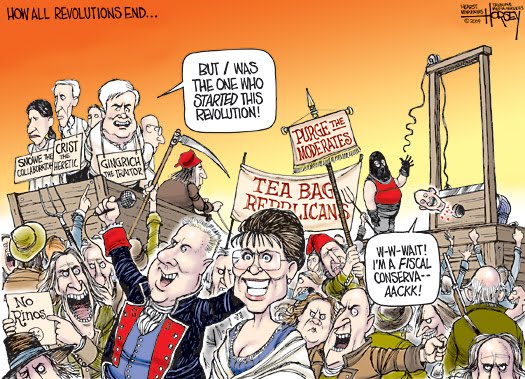
Labels: foolishness, insurrections, revolutions, tebaggers
¶ 10:28 1 comments
Blame Society Productions brings a unique Thanksgiving Day message with the help of "Sean Connery", "Jon Madden", "Christopher Walken" and others.
Labels: animation, thanksgiving, you tube
¶ 13:17 0 comments
Labels: fairness, health care, injustice, poverty, public option, social equity
¶ 03:59 0 comments
Labels: book signing, interviews, opinion, Sarah Palin
¶ 02:28 0 comments
Edward Orzechowski, President and CEO of Catholic Charities of DC, speaking at the October 26 hearing on Washington, DC's same-sex marriage bill. Today, November 12, the Archdiocese threatened the Council to withdraw services to thousands of District residents over gay marriage. At the Council hearing, was answering questions from Councilmen Phil Mendelson and David Catania. As was discussed, Catholic Charities gets 75% of its money from public funds, and according to Washingtonian, Orzechowski has a[n annual] paycheck of $268,000. As Catania stated, that's taxpayer dollars going to an organization that says it does not intend to comply with anti-discrimination laws.
[for the rest of the story... go here
...or you could watch the YouTube hearings where a DC city council member, David Cantina, [who has a long history of supporting taxpayer dollars being given to Catholic Charites] says he ...finds it offensive that DC Catholic Charities is willing to accept 40 million dollars of government funds, but be exempt from providing services in a fair and equitable manner. They arre threatening to shut down ALL public services if the major funding source [i.e. taxpayers] dont do what the Catholic Church wants.
Perhaps this means the church will then have more money to pay off the victims of pedophile priests.
Labels: BIGOTRY, CATHOLIC CHURCH, discrimination, gay rights, PREJUDICE, social control, TAXPAYER DOLLARS
¶ 16:14 0 comments

Don't try looking for my rondak pages tonight. I am amidst changing ISP's and although I have been assured that the changeover would be seamless, that does not seem to have occurred.
We'll be back as soon as possible.
Labels: ISPs, moving, websites
¶ 20:37 0 comments
Stefani Joanne Angelina Germanotta (born March 28, 1986), better known by her stage name Lady Gaga, is an American recording artist. After being signed to and quickly dropped from Def Jam Records at age 19, she began performing in the rock music scene of New York City's Lower East Side. During this time, she was also working at Interscope Records as a songwriter for several established acts, including Akon, who, after hearing Gaga sing, convinced Interscope chairman Jimmy Iovine to sign her to a joint deal with the label and Akon's Kon Live Distribution label.
Her debut album The Fame, was released in August 2008 and was a critical and commercial success. In addition to receiving generally positive reviews, it has gone to number one in four countries, also topping the Billboard Top Electronic Albums chart in the United States. The album's first two singles, "Just Dance" and "Poker Face", have become international number-one hits, and the former was nominated for Best Dance Recording at the 51st Grammy Awards. In 2009, after having opened for New Kids on the Block and the Pussycat Dolls, Gaga embarked on her first headlining tour, The Fame Ball Tour.
Gaga is inspired by glam rockers such as David Bowie and Queen, as well as pop singers such as Madonna and Michael Jackson. She is also inspired by fashion, which she claims is an essential component to her songwriting and performances. To date she has sold over 20 million digital singles and more than four million albums worldwide.
Labels: Lady GaGa, musicians, pop stars, videos
¶ 20:20 0 comments
In a rare public appearance before Salt Lake City lawmakers Tuesday night, The Church of Jesus Christ of Latter-day Saints supported two proposed ordinances protecting gay and lesbian residents from housing and employment discrimination.
An LDS Church representative read a supporting statement at a public hearing before the Salt Lake City Council regarding the ordinances proposed by Mayor Ralph Becker.
"The church supports this ordinance because it is fair and reasonable and does not do violence to the institution of marriage," said Michael Otterson, managing director of the LDS Church's public affairs office.
Otterson added that the statement of support is consistent with the church's prior position on such matters, as well as its stance on marriage. Both are found in the church's August 2008 statement titled "The Divine Institution of Marriage."
Labels: discrimination, equal rights, gay marriage, gay rights, human rights, lds, overcoming prejudice, Pam Spaulding, social equity. mormons, social justice
¶ 09:19 0 comments
We might learn something from that.
• The Center for Media and Democracy. Founded by John Stauber in 1993 as an independent, non-profit, non-partisan, public interest organization. CMD's mission is to promote transparency and an informed debate by exposing corporate spin and government propaganda and by engaging the public in collaborative, fair and accurate reporting.
 • Source Watch is a free encyclopedia of people, issues, and groups shaping the public agenda that is being written collaboratively on this web site. It catalogs descriptions and details of PR firms, activist groups and government agencies as well as the criticisms that are made of these groups from different perspectives.
 You may not agree with all of the criticisms on the site, and if you think something that appears is unfair, you can fix it! The site is a Wiki, meaning that anyone, including you, can edit any article by clicking on the "edit this page" link that appears in every article in SourceWatch. As more and more people edit the articles, they improve in quality all the time.
• Diamonds and Toads. Want to know the latest on fairy tales even re-written ones? Here's a place to visit.
Labels: language, media, non-profits, oversight, story telling, typography, vigilance
¶ 00:28 0 comments
The title comes from a column I wrote while working at a small chain of weekly papers in the Adirondack mountains, some 20 plus years ago. As it suggests, my intent is to try to keep to the gist of a subject,
 reserving more detailed entries to linked pages, either things created by others, or by me.
Subject matter can and will vary, and may occasionally be all over the place. There is a lot that interests me. More than likely, since I'm a serious kind of guy, you can expect the tone to be serious. What I'm getting at is that you aren't likely to find tabloid gossip fodder here [though may have a link in the right hand column that could sate the needs of someone else ~ give a look at the other sites referenced]. I'm not without a sense of humor, so don't expect the tenor of the site to be completely gawd awful dull. I do want to keep you interested in content.
Other Blogs I read. They're all over the place politically and philosophically. While one might assume, based on my personal perspectives and points of view, that I stick to the left, I read many from the right as well as others off the charts. Evidence of thinking is my main criteria, not that the occasional addle-brained website doesn't ever get added. Diversity is good.
Other Links: What you see on the side are a sampling of those I have come across. They reflect subjects that have piqued my interest and about which I wish to share. I also maintain another blog Blogging about Links where I provide an annotated selection of links related to a specific topic.
Labels: philosophy, values, will brady
¶ 23:35 0 comments

Affecting Social Change is much more than mouthing slogans or sound bites. It can mean devoting hours - days - years - spending time with those who are reluctant and unwilling to hear the truths of others or to work at changing existing social policy or considering other ways of living.
Yet making the fundamental changes in the values that underlie oppressive social policies require interacting with those who oppose us. This must be done before we get to the voting booth, before we get to legislative committee hearings or public forums. We need to get our points across and to affect change in board rooms and private offices; in juvenile and adult corrections, mental health, the courts, in educational, cultural, legislative and personal spheres ~ where ever decisions affecting all our lives are made regularly and daily ~ and we need to do this now!
We must infiltrate the meeting places of adversaries and decision makers who oppose eliminating wrongs. We must insist upon and make impact by directly negotiating policy change, laws and directions for the future. Once there, being heard, we have to make our points clearly enough to be effective advocates for change. Now, affecting change doesn't necessarily make for chit chat or small talk at parties. You won't be making friends with those you meet and confront at policy plannings or while negotiating change, nor will your own friends necessarily want to know about the details of your efforts.
Even if we cannot immediately make changes to oppressive social policies or practices, our mere presence in some of these meeting places can prevent additional harmful policies from being implemented. Also ~ remember to stay in touch with others who know what you say to be true, and to refresh and replenish yourself from behind-the-scenes battles rather than burn yourself out. Stay healthy to battle successfully.
Labels: commentary, philosophy, social change
¶ 23:00 0 comments
 • The Courage Campaign pushes for marriage equality. Having now been legally wed for a couple of years now, I fully support the initiatives elsewhere.
 On Tuesday, November 3rd, 2009- less than a week away- there will be critical votes on on LGBT equality in three states: Washington State, Maine, and Michigan. With so much attention devoted to other issues in the political realm, bloggers have banded together to ensure we don't forget the ones with a firm deadline next week.
For that reason, Courage Campaign staff have put together a summary of who, what, and how about these three campaigns. If you haven't heard of these campaigns, and/or haven't done anything yet to support them, please consider helping out. If you are a blogger please feel free to grab this content whole cloth and use it for your blog posts.
Last year, as Obama and Democrats were winning across the country, we lost marriage equality in California. It was a bittersweet victory. Pitch in to make sure 2009 isn't a bittersweet year. Take action to support LGBT equality TODAY. Find out more about phone banks and getting supportive voters to the polls at The Courage Campaign website.
 • Absurd Inventions is the subject of a Planet Oddity entry. Everything you never thought to ask for including a bulletproof bed [the "Quantum Sleeper"]; piercings to hold eyeglasses to one's face [how's that for ick factor?]; the "Fish and Flush" toilet [the fish get a panoramic view of the sitter's back]; a hurricane proof house [a refurbished jumbo jet - the rationale being that the shape can already withstand high winds].
 My hands down favorite, though, is "the human car wash." According to the blurb on Planet Oddity,
 Hospital patients [and prisoners, as well] need bathing and to speed up this process, may we suggest the Human Car Wash? The HCW eliminates slipping and falling because the washees are strapped into a hanging harness and merely need to stand or dangle in a fixed position while the conveyor belt moves them from station to station. First the wetting station, then the soapy spray station, next the rinsing station and at the end, no towels are needed because there’s a blow drying station!Yeah, there's a few things that might be said about violations of personal dignity and the like, but with a contraption like this, it may cut down on rapes in the prison shower.
Developed in 1969 during the cold war, the inventor suggests the Human Car Wash can be built into a mobile trailer “to cope with the mass bathing requirements after an atomic bomb”.
All said and done, I'd guess that these inventors marvels are not really the most absurd inventions of all time.
 • Web Urbanist's Abandoned Wonders of the World.
 There really is no shortage of abandoned buildings in the world and they are exciting. They stoke the imagination of many an urban spelunker. Websites such as Infiltration and Opacity freely offer advice to any neophyte explorer of abandoned buildings, sometimes with disclaimers suggesting not to traipse on property not technically your own.
The batch of sites noted at Web Urbanist provides a glimpse of the many kinds of sites that get abandoned. Most curious to me is the
 Chapel to Mount Hope Cemetery in Rochester, NY. Such famous persons as Susan B. Anthony and Frederick Douglas are among those buried there in everything from lawn crypts to family mausoleums. It seems strange, then, that the chapel at such an historically significant location would be abandoned to the elements, though it remains elegant even in its disrepair.
 Of special interest to me is the Bethlehem Steel factory in Lackawanna, NY, located just south of Buffalo, I worked there for about a year as a laborer in the bricklayer's department. It would indeed be a treat to wander about that complex once more. The plant traversed the entire western edge of Lackawanna, and across a highway that separated that city from a most likely very polluted part of Lake Erie. At the north end were the coke ovens where we'd work on relining one oven just next to others that were operational. It was hot work.
I understand that much of that plant is no longer explorable and has, in fact, been demolished. In place of the old coke ovens are a small, and growing assortment of tall wind generator mills. Thankfully, people did manage to explore the plant before it was torn down.
 • At Nightmare Hall, blood pressure rises with a TV diet of "...apocalyptic and tin foil helmet conspiracy news." This erstwhile blogger does no believe in conspiracies noting, aptly, that "...The powers that be are right in the sheeple's faces, but nobody seems to notice or care."
 Arriving at a conclusion that TV can be toxic is nothing new, of course. My favorite film version of TV poisoning is the creepy Canadian produced 1983 social sci-fi flick Videodrome written and directed by David Cronenberg and starring James Woods and singer Debbie Harry. The premise is that that Videodrome is the public "face" of a political ideology movement with unspecified but apparently violent goals. Sound familiar? I'll stop here.
Universal Studios announced, last Spring, they will do a remake of the film.
Harking back to Nightmare Hall's recount, he references Druid Journal's 8 reasons why TV is evil [It is Plato's Cave "...now in Hi-Def"] and check his other links to doing away with the one-eyed face-changing monster from your home and your life.
Labels: abandonded buildings, bloggers, equal rights, gay marriage, propaganda, steel mills, strange inventions, urban exploration, videodrome
¶ 12:42 1 comments


